Water Where It Shouldn’t Be? Here’s What to Do
We’ll tell you what’s likely going on and get someone out fast
Free inspections • Licensed and insured • Locally Owned
Serving Spring Hill and Hernando County
Here’s What Usually Brings People to This Page
✔ A wall or ceiling that’s discolored or bubbling
✔ A musty smell that wasn’t there last week
✔ Flooring that feels soft or spongy in one spot
✔ A water bill that jumped for no reason you can think of
✔ Water sitting on the floor after a storm or a burst hose
If you’re nodding along to any of that, let’s get it looked at before it turns into something bigger.
Water Damage Restoration in Spring Hill and Hernando County
Water’s sneaky. It doesn’t stay put in the one room where it showed up, it works its way under baseboards, into the subfloor, wherever it can get, and the longer nobody deals with it, the more it ends up costing to fix.
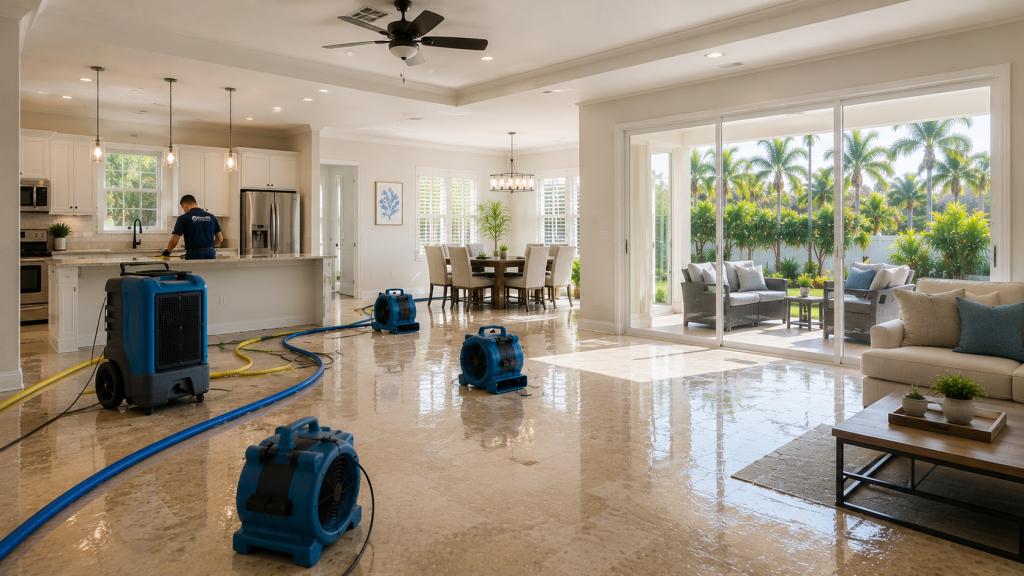
We treat every call like the clock’s running, because it is. We come out with real equipment, moisture meters, not just a mop and a fan, so we can find water you can’t see before it turns into warped flooring or a mold problem down the road.
We work all over Spring Hill, Brooksville, Weeki Wachee, Timber Pines, Hernando Beach, and everywhere in between. Licensed, insured, and we’ll come take a look for free.
Why the Clock Actually Matters
This isn’t just something restoration companies say to create urgency. Industry standards actually classify water damage by contamination level, clean water starts out as what’s called Category 1, safe to be around, minimal risk. But that same clean water sitting for 24 to 48 hours without being dealt with can degrade into Category 2, water that’s picked up enough contamination to actually make people sick. Wait longer, or let it mix with sewage or floodwater, and it becomes Category 3, which needs full protective gear and a much more involved cleanup.
That’s the real reason a leak caught the same day is such a different job than the same leak caught a week later. It’s not just about how much it’s spread, it’s about what the water itself has turned into.
Why This Gets Expensive If You Wait
Here’s something most people don’t think about: the cost almost never comes from the water itself. It comes from what the water touches on its way through your house. Clean water from a supply line is one thing. That same water sitting in your drywall for three days, wicking up into your cabinets, soaking into carpet padding, that’s a different job entirely.
And the humidity around here doesn’t help. Stuff that would dry out on its own somewhere drier just sits wet here, sometimes for days, unless somebody brings in real drying equipment. That’s the difference between fixing this in two days versus two weeks.
We’ve seen it plenty of times, someone mops up what they can see, runs a box fan for a few days, figures it’s handled. Then a month later there’s a soft spot in the floor or a smell that won’t go away. Looking dry and actually being dry underneath aren’t the same thing.
What Actually Affects the Job
Depends on a few things: how much area got wet, what kind of materials, how long the water sat before anyone called, and what category of water it turned out to be. A bathroom leak caught the same day is a very different job than a slab leak that’s been running under your floor for weeks without anyone knowing.
We come out, take real readings in every spot that got wet, and give you a straight, written breakdown of what needs to happen before we touch anything. No guessing, no surprises halfway through.
What We Actually Do
Short version: we send out a water extraction crew to pull the standing water out first if there’s any, then bring in structural drying equipment to dry everything properly (checking daily, not just leaving fans running and hoping), treat anything that could turn into mold, and then put your house back together, drywall, flooring, cabinets, paint, whatever it takes to get back to normal. We also keep photos and notes the whole way through, which your insurance company will want to see, and our insurance claims assistance page walks through how that process usually goes.
If mold’s already started by the time we get there, we handle that as part of the same job rather than treating it separately, which is our mold remediation work.
Frequently Asked Questions
How long does this whole thing take?
A small, isolated leak might take two or three days to dry out completely once we’ve got equipment running. Something bigger, multiple rooms, water that soaked into framing or subfloor, could take a week or more, especially with the humidity here slowing things down. We’ll give you a real number after we’ve actually looked and taken readings, not a generic estimate before we’ve even seen the extent of it.
Do I have to stay somewhere else while you work?
Usually not. Drying equipment runs pretty constantly and it’s a little noisy, but it’s not dangerous to be around, and most people just work around it in another part of the house. If it’s a bigger job involving mold, air quality concerns, or a lot of equipment packed into a small space, we’ll tell you honestly if it makes more sense to be elsewhere for a few days rather than trying to push through it.
I have no idea how long the water’s been there. Does that matter?
Happens all the time, especially with slow leaks behind a wall or under a slab that nobody notices until there’s a stain or a smell. Our moisture meters can tell us how far the water actually traveled even without knowing exactly when it started, and that reading tells us a lot about what category the water’s likely turned into by this point, which changes how we approach the cleanup.
Will insurance actually cover this?
We’ll document everything thoroughly, photos, moisture readings, a written scope, and talk directly to your adjuster if that helps move things along. Whether it’s covered really depends on your specific policy and what caused the water in the first place, sudden events are usually covered, gradual neglect often isn’t, but we’ll help you understand where your situation likely falls once we’ve seen it.
What if there’s already mold when you get there?
We’ll flag it right away during the initial assessment and fold it into the same job instead of treating it as a separate problem you’d have to deal with later. That usually means less overall disruption and one continuous process instead of stopping partway through to bring in a different crew.
Do you handle the repairs too, or just the cleanup?
Both, from the water extraction and drying all the way through drywall, flooring, cabinets, and paint. You’re not stuck finding a second contractor to finish the job, and you’re not left with a house that’s technically dry but still torn apart and unusable.
Water Doesn’t Wait Around, So Neither Should You
The first hour matters more than any other, not because we’re trying to rush you, but because that’s genuinely when clean water is still just clean water. Every hour after that is working against you. Give us a call or fill out the form on our contact page, head back to our homepage to see everything we handle, or check our hurricane prep checklist if you want to get ahead of the next storm.