Storm Damage? Here’s What Needs to Happen First.
We’ll stop the water first, then handle the drying and repairs
Free inspections • Licensed and insured • Locally Owned
Serving Spring Hill and Hernando County
What Storm Damage Usually Looks Like
Storm damage isn’t always obvious. Here’s what to look for:
✔ A water stain on the ceiling after a hard rain
✔ Shingles missing, lifted, or visibly damaged
✔ Water getting in around a window or door during wind-driven rain
✔ Water near the foundation that isn’t draining like it should
✔ Debris damage to siding, roofing, or windows
Even one of these is worth a closer look before the next storm rolls through.
Storm Damage Restoration in Spring Hill and Hernando County
Sometimes storm damage is obvious, a tree through the roof. Other times it’s quieter, rain sneaking in around a roof seal you’d never think to check until there’s a stain on the ceiling. Either way, how fast you respond matters more than how big the storm was.
Since we’re local, we’re not competing with crews driving in from somewhere else after a big storm hits. We get to Hernando County calls fast, before secondary stuff like mold has a chance to start.
We cover storm damage across Spring Hill, Brooksville, Weeki Wachee, Timber Pines, Hernando Beach, and everywhere in between, minor rain intrusion up through real hurricane damage. Licensed, insured, free inspection.
Wind-Driven Rain vs. Actual Flooding
Not all storm damage looks like a flood. Wind can push rain sideways through small gaps around windows, doors, and roof flashing that would never let water in under normal rain. People are always surprised how much water gets in this way with no obvious roof damage at all.
We check for both when we inspect, obvious flooding at ground level, and the less obvious wind-driven rain working its way in higher up. Missing either one means missing part of the damage.
How Repairs Get Done Actually Matters
When we rebuild after storm damage, how the roof gets reconnected isn’t just about getting it closed back up, it affects how it holds up next time. Florida’s building code cares a lot about roof-to-wall connections, hurricane straps instead of just nails, and a properly sealed roof deck underneath the shingles or tile. Homes with those features documented tend to hold up better in the next storm, and they can also qualify for a wind mitigation discount on your insurance premium, something a lot of homeowners don’t realize applies to them until someone points it out.
We won’t do a wind mitigation inspection for you, that’s a separate licensed inspection, but if we’re already doing roof-related repair work, it’s worth asking your insurance agent whether it’s worth getting one done afterward.
Getting Ahead of Hurricane Season
Folks around here know the rhythm of hurricane season, and the houses that come through it fine are usually the ones where small stuff, aging roof flashing, a window seal that’s seen better days, got fixed before the season started instead of after a storm found it.
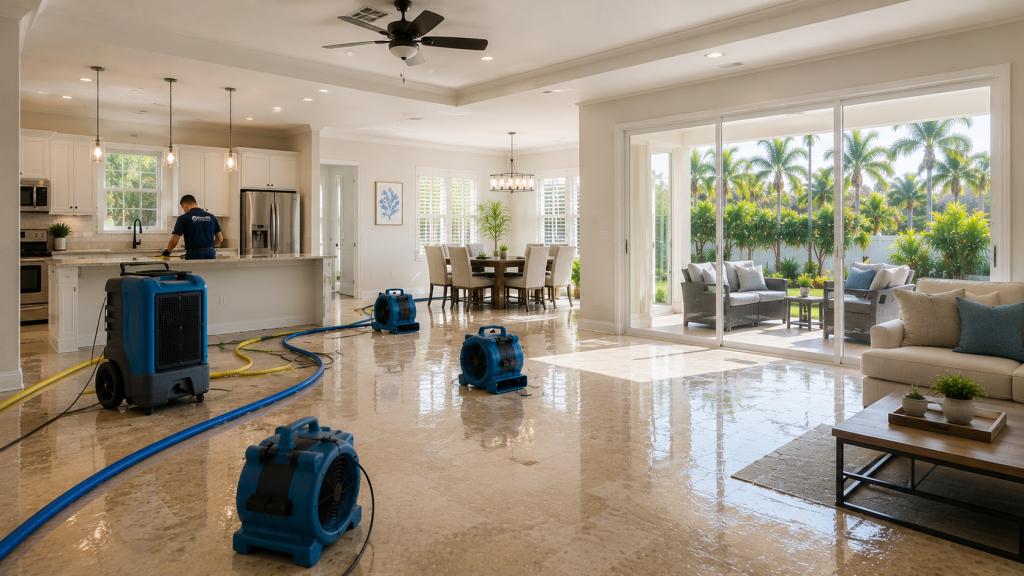
If a storm already got into your house, our first move is stopping any further water from coming in, tarping, boarding up, whatever it takes, before our water extraction and structural drying teams move in to dry things out and make repairs. If you want a head start next time, we put together a short hurricane prep checklist that covers the stuff most people miss.
Frequently Asked Questions
Can you tarp my roof right after a storm?
Yes, that’s often the first thing we do. Stopping more water from getting in matters more than starting the permanent fix right away, since every additional storm or heavy rain before it’s sealed just adds to the damage. We’ll get a tarp or board-up done quickly, then move into drying and repairs once the property’s actually protected.
What if it’s wind damage, not flooding?
Wind-driven rain gets in through small gaps around windows, doors, and roofing, and causes real damage without an obvious flood anywhere in the house. It’s easy to miss because there’s no standing water to point to, just a stain, a soft spot, or a musty smell that shows up later. We check attic spaces, window and door seals, and roof penetrations specifically for this, since it’s the kind of damage that gets missed if you’re only looking for the obvious stuff.
Will insurance cover storm damage?
Most homeowners policies cover sudden storm damage like wind and wind-driven rain intrusion. Flood damage from rising water is usually a separate category that needs its own flood insurance policy, so the cause of the water matters a lot for how a claim gets handled. We document everything thoroughly and can talk directly with your adjuster to help sort out which category your damage falls under.
How soon should I get this looked at after a storm?
As soon as it’s safe to be back in the house. Even damage that doesn’t look urgent, a few missing shingles, a small stain, can let water keep getting in with the next rain, and Hernando County doesn’t usually go long between storms during the season. Waiting even a week or two can turn a small fix into a bigger one.
Do you work with roofers?
Yes, for anything needing a permanent roof fix, we coordinate the inside work with your roofer so it all comes together in the right order instead of overlapping or leaving gaps in the timeline. We also make sure the reconnections, straps, sealed decking, meet the standard that actually holds up and counts toward wind mitigation if you decide to pursue that afterward.
Get Ahead of It Before It Spreads
Water that got in during a storm doesn’t stay contained to where it entered. It travels along framing, wicks up into drywall and cabinets, and gives mold a real head start if it’s not caught quickly, and the next storm doesn’t wait for you to get around to it either. Whether it’s a tarp on a roof right now or repairs from a storm that came through weeks ago and you’re just now seeing the damage, the sooner it’s handled, the less it turns into.
Call us or reach out through the contact page, and we’ll get someone out to take a real look, or see our water, mold, fire, and storm restoration services if you’re not sure this is the right page for your situation.