Mold Doesn’t Wait, and Neither Should You
We’ll tell you what’s likely causing it and get someone out to take a look
Free inspections • Licensed and insured • Locally Owned
Serving Spring Hill and Hernando County
Some Signs Worth Paying Attention To
Not sure if what you’re seeing is actually a mold problem? A few common signs:
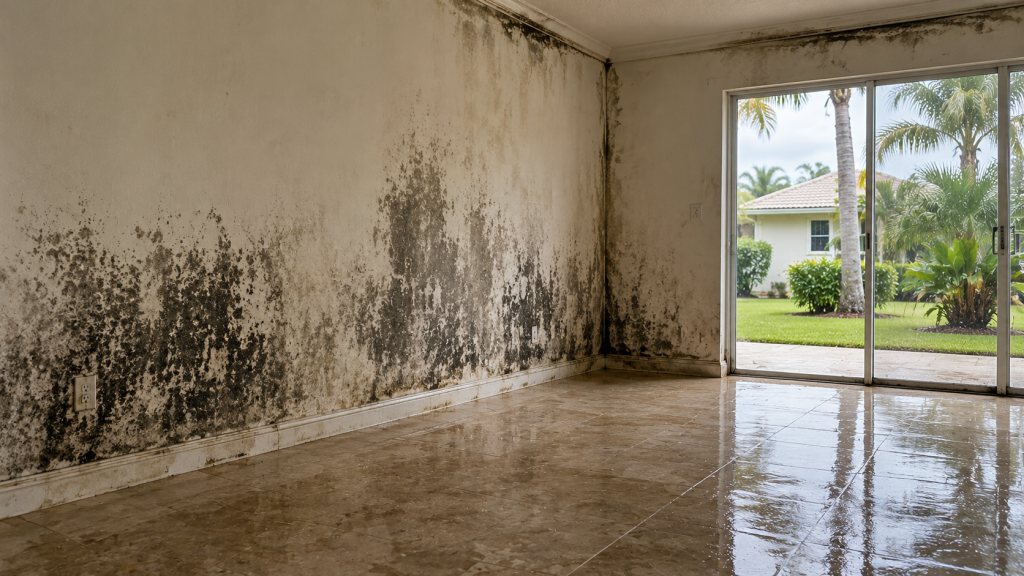
✔ Black, green, or white growth on a wall, ceiling, or grout line
✔ A musty smell that keeps showing up, especially in a bathroom or under a sink
✔ Recent water damage that never really got dried out properly
✔ Allergy-type symptoms that ease up when you’re away from the house
✔ Paint or wallpaper peeling in a humid spot
If a couple of these sound familiar, it’s worth having someone actually look rather than guessing.
Mold Remediation in Spring Hill
Mold needs two things: moisture and time. We’ve got plenty of the first around here, so once a leak or a humid spot goes unaddressed, mold can start showing up within a couple of days.
Dealing with it properly means more than wiping down the spot you can see. We contain the area so spores don’t spread through the rest of the house, remove what can’t be saved, treat what can, and, this part matters most, fix whatever’s actually keeping that spot wet. Otherwise you’re just going to see it again in a few months.
We handle mold jobs all over Spring Hill and Hernando County, from a small bathroom ceiling patch to a full room after a bad flood. Licensed, insured, free look.
Why Mold Shows Up So Often Here
Hernando County stays humid for a good chunk of the year, which means the air inside a house is often already close to the point where things struggle to fully dry. Add a leak, a bathroom fan that’s not really doing its job, or a slow drip from the AC line, and mold’s got exactly what it needs.
This is also why cleaning mold without fixing the moisture source almost never sticks. If a bathroom fan isn’t venting properly, or a roof leak never actually got repaired, the mold comes right back in the same spot no matter how well it was cleaned the first time.
Finding the Actual Source, Not Just the Spot You Can See
What’s visible is usually just part of it. We check around and behind the area, inside nearby cabinets, under the flooring, in the next room over, since mold can travel through wall cavities and ductwork without ever showing up where you’d expect.
We set up containment so spores don’t travel during removal, pull out drywall or flooring that’s beyond saving, and treat everything else with the right products. Then we track down and fix the actual source, sometimes it’s obvious, other times it takes a little digging, a grout line, a window seal, an AC line, and keep photos so you’ve got documentation for your insurance or if you ever sell the place.
If the mold’s tied to a recent leak that’s still soaking things, our structural drying team can take care of that side of it in the same visit.
Frequently Asked Questions
Can’t I just clean it with bleach?
Bleach lightens the surface and kills what it directly touches, but it doesn’t reach mold that’s already grown into porous material like drywall or wood, and it does absolutely nothing about the moisture that’s letting it grow in the first place. For anything past a really small, contained spot on a hard surface, it’s worth having someone actually deal with the source instead of just treating what you can see.
Do I need to leave the house?
For a small, contained spot, usually not, the work stays localized and doesn’t affect air quality throughout the house. For something bigger, a large area, a room that’s been wet for a while, or mold that’s spread into shared air spaces, we might suggest staying elsewhere while we’re actively containing and removing it, and we’ll be upfront with you if that applies to your situation.
Will it just come back?
Not if we fix what actually caused it. That’s the part a lot of DIY cleanups and even some quick professional jobs skip, they clean the visible spot and stop there, but if the moisture source, a leaky vent, a bad seal, a roof issue, never gets addressed, the mold has everything it needs to start right back up in the same spot within a matter of weeks.
Can you give me paperwork for insurance or a home sale?
Yes, we document before and after with photos and notes, which comes up a lot during real estate transactions and insurance claims. Buyers, agents, and adjusters often want to see that a mold issue was actually resolved properly, not just painted over, and having that documentation on hand can save you a headache later.
How can I tell mold from regular mildew?
Mildew stays on the surface, usually appearing gray or white and somewhat powdery, and it typically wipes away without much trouble. Mold tends to be darker, sometimes fuzzy or slimy in texture, and it actually grows into the material it’s on rather than just sitting on top of it, which is why it’s harder to remove and more likely to come back if the underlying cause isn’t fixed. If you’re genuinely not sure which one you’re looking at, it’s worth having it checked rather than guessing.
Can you also test the mold or certify it’s gone?
Not us specifically, and that’s actually by design. Florida law keeps mold assessment and mold remediation as two separate licensed roles, an assessor can’t perform remediation on a property they inspected within the past year, and the reverse is true too. It’s meant to keep whoever’s testing from having a financial stake in whoever’s doing the removal work. If you want independent testing or clearance documentation, that needs to come from a separate licensed mold assessor, and we’re glad to point you toward one if you need it.
Mold Doesn’t Go Away on Its Own
If you’re seeing spots, smelling something musty, or dealing with a room that never quite dried out right after a water damage incident, that’s not going to resolve itself, mold just keeps spreading while you wait. Every week it sits is another week it’s working its way further into drywall, wood, and anything else nearby, and that’s the difference between a small job now and a much bigger one later.
Reach out through the contact page, or see our water, mold, fire, and storm restoration services if you’re not sure this is the right page for your situation.