Water Damage Recently? It Might Not Be as Dry as It Looks.
We’ll check with moisture meters and tell you exactly where things stand.
Free inspections • Licensed and insured • Locally Owned
Serving Spring Hill and Hernando County
Why “It Looks Dry” Doesn’t Always Mean Dry
A few things worth knowing if you had water damage recently:
✔ Wood framing can hold moisture for days without any visible sign
✔ Drywall pulls water upward, often higher than where the flooding actually reached
✔ Trapped moisture is the number one reason mold shows up after a flood
✔ Materials that stay wet too long can warp, swell, or just weaken over time
None of that’s obvious just by looking, which is exactly why we check instead of guessing.
Structural Drying in Spring Hill and Hernando County
The humidity around here doesn’t do you any favors. Stuff that looks dry on the surface can still be holding a lot of moisture underneath, and that moisture has nowhere to go on its own in air that’s already thick with humidity most of the year. That’s exactly the setup mold needs.
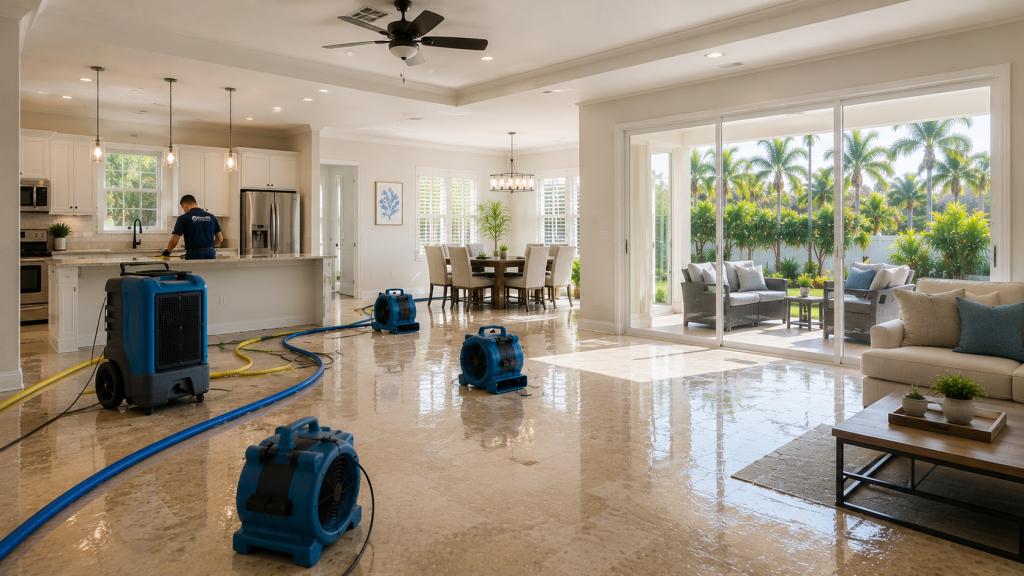
We don’t just set up fans and walk away. We take real moisture readings before we place any equipment, put it where the science says it should go, and check back daily until the numbers actually confirm things are dry, not just until it feels dry.
We handle this all over Spring Hill, Brooksville, Weeki Wachee, Timber Pines, Hernando Beach, and everywhere in between, whether the water came from a plumbing failure, a storm, or a leak nobody noticed for a while. If there’s still standing water involved, our water extraction team handles that side of it first. Licensed, insured, free look.
Dry to the Touch Isn’t the Same as Actually Dry
Drywall and framing can feel dry within a day of getting wet while still holding way more moisture inside than you’d think, sometimes a lot more than what’s safe. And that moisture doesn’t just evaporate on its own in a house this humid, it just sits there.
That’s why we use moisture meters instead of trusting how something looks or feels. Two rooms that look identical after a flood can be in completely different shape underneath, and treating them the same is how mold ends up getting missed.
What Happens If This Gets Skipped
Skipping this step, or stopping too early, is one of the most common reasons people end up needing our mold remediation team weeks after they thought everything was handled.
It’s also just bad for the materials themselves. Wood that stays wet too long starts losing strength, and drywall that keeps getting wet and drying without ever fully drying out tends to soften and break down faster than it should.
How Long This Usually Takes
Most straightforward jobs run three to five days with equipment running the whole time, though it depends on how much got wet, how long it sat before we started, and how humid it is outside. A single wet closet dries a lot faster than an open living room with several wet materials.
It’s tempting to shut things off early once a room feels normal again, but feeling normal and being dry aren’t the same thing, which is exactly why we go by the readings and not by how the room feels when we walk in.
Frequently Asked Questions
How do you actually know if my walls are still wet?
Moisture meters, and thermal imaging when we need it, tell us what’s going on inside the wall or floor without having to cut into anything first. We take readings across the whole affected area, not just one spot, since moisture levels can vary a lot even within the same wall.
Will you have to cut into my drywall?
Not always. Caught early with the right equipment, drywall can often dry in place without needing to be removed. If it’s been wet too long, or there’s contamination involved that means it can’t be fully saved, we may need to remove some, and we’ll explain exactly why before we do anything, not just show up and start cutting.
Is the equipment loud?
Yeah, a bit, similar to a box fan or window unit running continuously for a few days. Most people find it manageable knowing it’s temporary, and we’ll let you know what to expect before we set anything up.
What counts as a safe moisture reading?
Depends on the material, wood, drywall, and concrete all have different baselines for what’s considered normal. We compare against a dry, unaffected part of your home to know when things are actually back to normal, rather than going off a generic number that might not apply to your specific materials.
Can the equipment run while I’m at work?
Yep, it usually just runs continuously and doesn’t need anyone home, though we’ll coordinate with you for our daily check-ins so you know how things are progressing even when you’re not there to see it.
Worried There’s Still Moisture Somewhere?
Even water that got cleaned up a few days ago can still be sitting in framing or drywall without any obvious sign, and that’s exactly the kind of thing that turns into a mold problem if nobody checks. It doesn’t hurt to have it verified, especially if something still feels off, a smell, a stain, a spot that seems softer than it should. Get in touch or give us a call, or see the rest of what we do if you’re not sure this is the right page for what’s going on.