
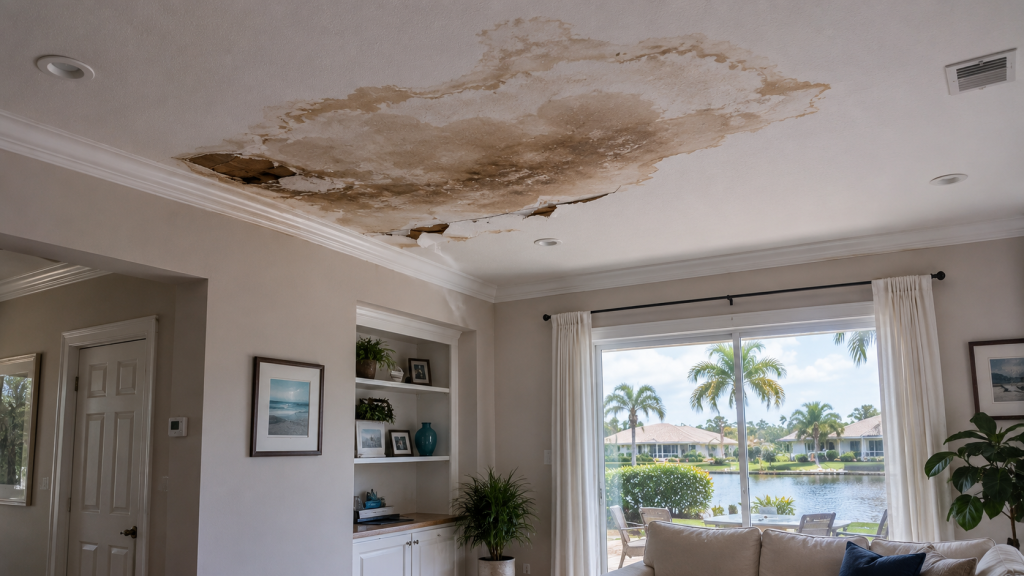
Ceiling Stain? Here’s What It Probably Means.
We’ll tell you what’s likely causing it and get someone out to take a real look
Free inspections • Licensed and insured • Locally Owned
Serving Spring Hill and Hernando County
Not Sure If You Need to Call? Check This First
✔ A stain that’s new, or one that’s gotten bigger
✔ A dry old stain you’re not sure is actually resolved
✔ A soft, sagging, or bulging spot on the ceiling
✔ A musty smell in the room with no obvious source
✔ You already patched it and it’s coming back through the paint
If any of that sounds familiar, let’s get it handled.
Ceiling Water Damage in Spring Hill and Hernando County
A stain on the ceiling never means what you hope it means. Whether it just showed up or it’s been there a while and seems to be spreading, something above that spot is either leaking now or has leaked before, and painting over it doesn’t fix whatever’s actually causing it.
What’s Actually Causing It
A few things cause most ceiling stains around here. A roof leak is the most common, worn flashing, a cracked pipe boot, or shingles that took damage in the last storm can all let water in that travels along the roof deck before it ever shows up on your ceiling, so the wet spot isn’t always directly under the actual leak. AC condensate is another big one in Florida, a clogged drain line or a cracked drip pan on your air handler can slowly leak for weeks before it’s obvious, especially if the unit’s in the attic. Plumbing from a bathroom or laundry room above can leak at a supply line or a drain fitting and show up on the ceiling below it. And sometimes it’s not a leak at all, just condensation from poor ventilation in a bathroom or kitchen, which looks similar but comes from a completely different problem.
Why the Stain Doesn’t Tell You Everything
Water travels before it shows up. A leak from the roof can run several feet along rafters or sheathing before it finds a spot to drip through, which means the stain on your ceiling might be nowhere near the actual source. That’s why guessing at the cause and patching just that one spot often doesn’t fix anything, the leak’s still there, it’s just found a slightly different path the next time it rains.
A dry, unchanging stain that hasn’t grown in a while is a different situation than a damp, spreading, or musty-smelling one. The first might be from an old leak that’s already been fixed. The second means something’s actively happening right now, and that’s the one that needs attention before it gets worse.
When It’s More Than Just a Stain
If the ceiling’s sagging, soft, or bulging anywhere near the stain, that’s not just cosmetic anymore, that’s water weight sitting in the drywall and it can fail without much warning. Get out of that room and don’t try to poke at it or catch the water yourself. And any water stain gives mold a chance to start within about a day of the area staying damp, which is exactly the kind of thing our mold remediation team checks for, so a stain that’s been sitting there for a while, even if it looks dry now, is worth having checked for what’s happening on the other side of that ceiling.
Frequently Asked Questions
I already painted over the stain, is that a problem?
It can be. Paint hides the discoloration but does nothing about the actual leak, and if the source wasn’t fixed first, the stain usually bleeds back through the new paint eventually. If you’re not sure whether the underlying issue was ever actually resolved, that’s worth checking before it becomes a bigger repair.
The stain isn’t wet right now, does it still need attention?
Often, yes. A lot of leaks are intermittent, only showing up during heavy rain or when the AC’s been running a certain way, so a dry stain doesn’t mean the problem’s gone. We check for what’s happening above the ceiling, not just what’s visible on it.
How do I know if it’s the roof, the AC, or plumbing?
Location’s a good clue. A stain under or near a bathroom or laundry room upstairs points toward plumbing. One near an exterior wall or under the attic often points toward roof or AC condensate. But the only way to know for sure is to actually get up there and look, guessing at it from the ceiling alone isn’t reliable.
Is a ceiling stain a sign of mold?
Not automatically, but it’s a real possibility, especially if the area’s stayed damp for more than a day or two, which is about how fast mold can get started. We check for it as part of any ceiling water damage call, since it’s not always visible from below.
Can you fix the actual cause, not just the ceiling?
We handle the ceiling repair itself, drywall, texture, paint matching, but for roof or plumbing issues we’ll identify what’s causing it and coordinate with the right trade if it’s outside our scope, so you’re not left with a new ceiling and the same leak waiting to come back.
Don’t Wait for It to Spread
A ceiling stain that’s ignored doesn’t stay small. It grows, it gives mold time to get established, and in the worst cases it turns into a sagging or failing ceiling that’s a much bigger job than catching it early would have been.
Call us and tell us what you’re seeing. We’ll ask a few questions, give you a straight read on what’s likely going on, and get someone out to take a real look. If it turns out there’s more moisture involved than expected, our structural drying team makes sure everything’s actually dry, not just the visible spot. If you’d rather write it out first, use the contact page and we’ll get back to you fast, or see our water, mold, fire, and storm restoration services if you’re not sure this is the right page for your situation.